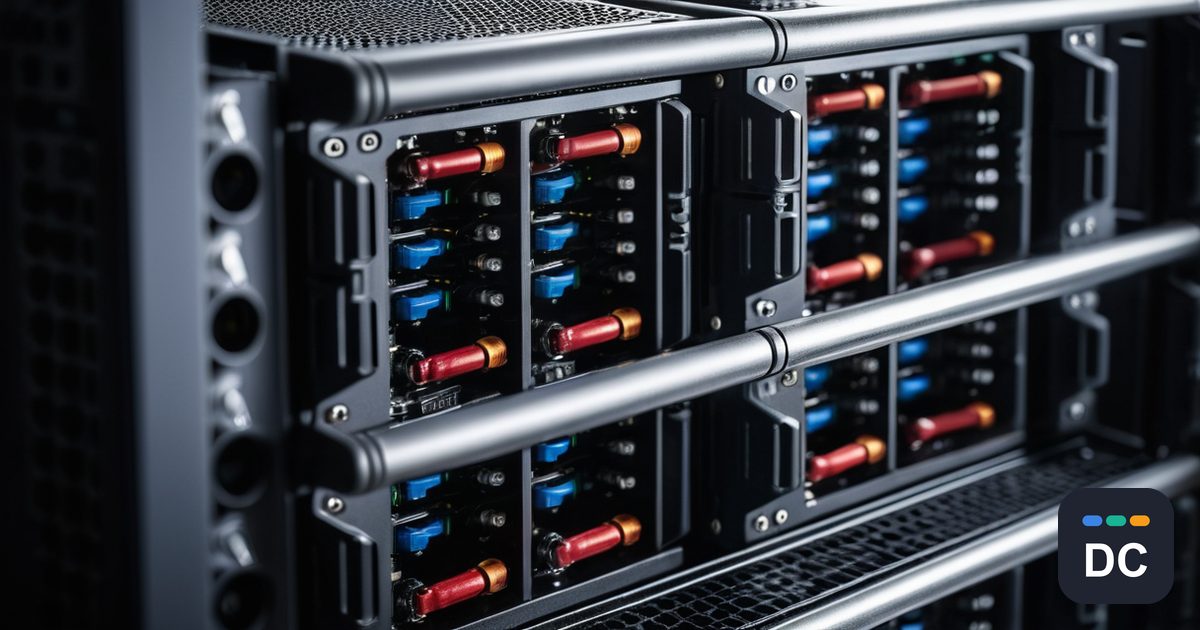
A microfluidic cooling design that runs coolant through etched copper plates pressed directly onto the chip could cut the energy a data center spends on cooling by up to 90%, New Atlas reported, citing the research team behind it.
The idea is familiar even if the plumbing is new: move the heat at the source instead of pushing cold air across a room. Direct-to-chip liquid paths shorten the distance between a hot die and the coolant, and the researchers argue that shrinks the parasitic energy — fans, chillers, the overcooled white space — that never did any computing.
The operator angle
Every “up to 90%” cooling number is a laboratory figure under ideal conditions. On a live floor it means nothing until you can see it. The only way to know what a new cooling approach actually buys you is the instrumentation that should already be running: cabinet-level inlet and outlet temperatures, differential pressure across the containment, and power at the feed — measured before and after, on the cabinets that actually changed.
A 90% headline is a reason to test, not a reason to believe. If you can’t watch the rack-level thermal map and your PUE move when you change the cooling, you’re buying a claim, not an outcome. The facilities that capture gains like this are the ones already metering at the cabinet — because they can prove what the new kit did, and bank only what’s real.
Sources
- New Atlas — “Cooling copper plates could slash data center energy use by 90%” — https://newatlas.com/energy/cooling-copper-plates-data-center-energy-use/