South Korea plans to invest roughly $648.2 billion to build out AI data center capacity, according to BigGo Finance. The reported program targets 18.4GW of new AI-ready capacity. A buildout of this scale concentrates significant new power, cooling and thermal…
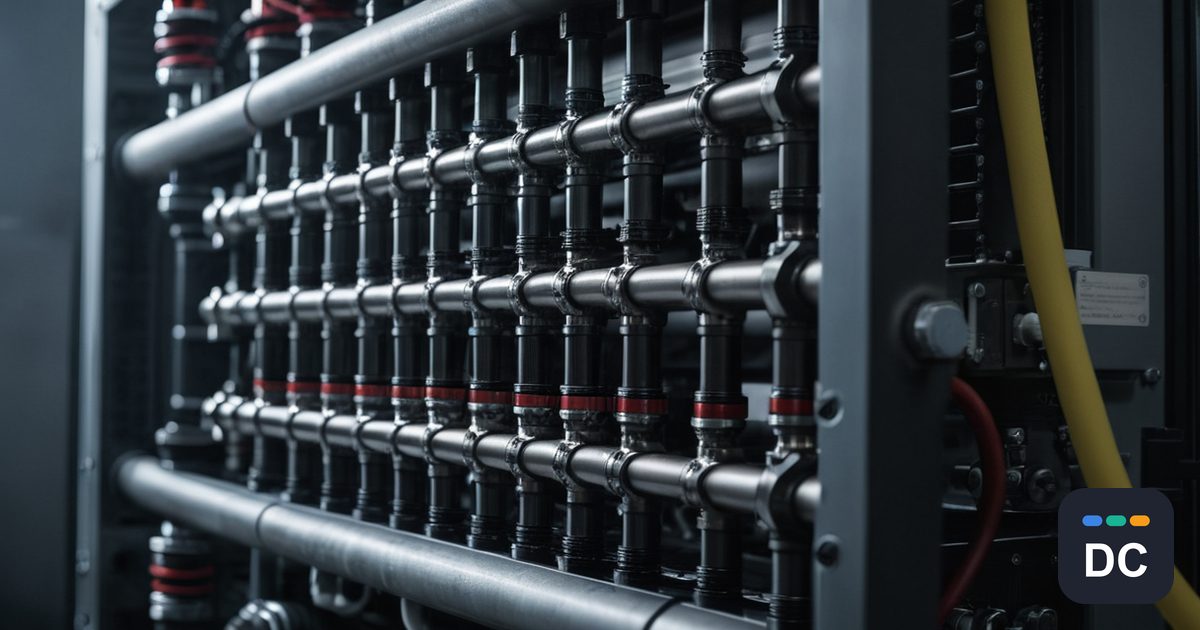
The short version: Immersion cooling beats every rival on paper. It achieves a lower PUE, higher rack density and has fewer moving parts. Yet direct-to-chip cold plate is becoming the go to architecture for hyperscalers. The reasons have little to…
TL;DR Monitoring provides data on sensor readings, while coverage determines if those readings address significant issues in data center temperature monitoring. Temperature readings are essential, but they do not provide a comprehensive view of heat distribution in a data hall.…
The short version: Most guides to data center cooling systems read like a menu—air, rear-door, direct-to-chip, immersion—and tell you to pick one. At AI rack densities that choice is already made for you by the silicon, and the real project…
TL;DR AWS commits an additional $13 billion to enhance its AI and cloud infrastructure in India. This investment builds on previous commitments and is aimed at boosting compute and data center capacity. India is a key market for cloud services…
TL;DR Stranded capacity refers to the discrepancy between allocated power and actual usage in data centers. Many data centers appear full based on design but operate inefficiently, having unused power and cooling headroom. Effective measurement is crucial; you cannot reclaim…
TL;DR A petition urges local leaders in DeSoto County to block a proposed AI data center, highlighting community resistance. Residents express concerns over potential strain on local resources, noise, and land use associated with the facility. The pushback against the…
TL;DR Most data centers called ‘full’ are running well below their nameplate power. Stranded capacity is built, cooled and financed — but never used. You can’t reclaim it until you can measure actual draw per rack. The request lands the…
TL;DR The dashboard may appear normal, but the real issue lies in the air between your sensors, where unnoticed hot spots develop. A single temperature reading is insufficient; it doesn’t represent the dynamic air movement in the data center. Average…
TL;DR The article argues that the ‘data-center water crisis’ may be overstated, conflating water withdrawn with water consumed. Operators face efficiency costs when managing heat, regardless of their cooling method — evaporative cooling or air. Good or bad cooling strategies…